
A Firm Foundation: Brad Collins and the Communities at Johnsville UMC and St. Luke UMC
Neighbors, did you know that within our community there is a smaller community with roots and heritage that you’ve probably never realized, but it has almost certainly benefited you and the folks around you? I learned this when I was invited to Johnsville United Methodist Church to interview Bradley Collins, a name that will sound familiar to Carroll County Public School students from the last 40 years as well as jazz enthusiasts across Maryland and beyond. After speaking with Brad and his cousin Robbinette Dorsey-Whittaker for over an hour, I left with the realization that this storied church has been the firm foundation of a large pocket of Sykesville’s Black community for over a century, and on that foundation stands an incredibly close knit group of people.
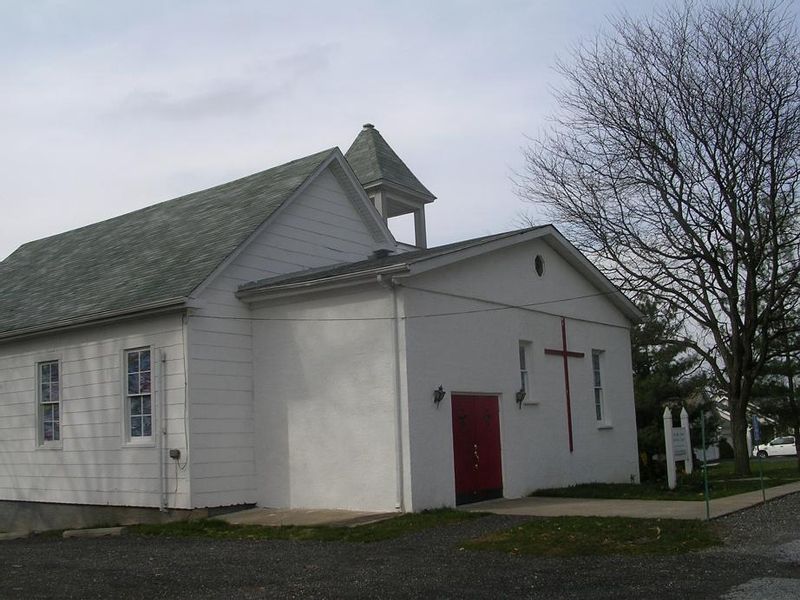
Johnsville United Methodist Church, 1124 Johnsville Road, Eldersburg, MD 21784 - Johnsville United Methodist Church is a well-rooted church in the Sykesville area. This historically black church has been standing strong for 105 years.
Brad Collins has lived in Sykesville and attended St. Luke United Methodist Church and Johnsville United Methodist Church for all 66 years of his life, and once I heard him talk about his friends and family, it wasn’t hard to understand why. The picture that he painted for me was one of a family so foundational that the concept of blood relations are secondary. That’s not to say that there aren’t sprawling family units here - when I mentioned to Robbinette that I would love to see a family tree, she responded, “it’s not a tree; it’s a forest!” And I believe her! But this is a community of folks that care for each other and want each other to succeed so fiercely that they’ve turned out countless firsts - Dedrie Kimbrow was the first and only Black Miss Sykesville, Louis Beard was the first Black principal in the area at Francis Scott Key High School, Richard Dixon was the first Black treasurer for the state of Maryland, Brad Collins himself was the first Black quarterback in the county, and the list goes on. The role models in each generation show the next how to step up and be leaders in their community, creating a firm foundation for future generations to build on.
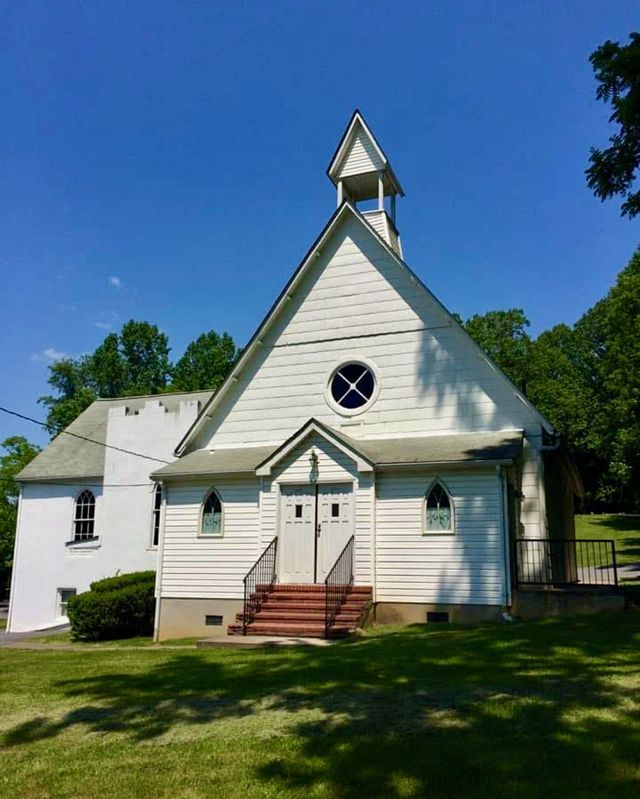
St. Luke United Methodist Church: A Legacy of Faith, Family, and Community
Over the course of our conversation, Brad introduced me to three sets of role models. The first was his father, George Collins, who worked in law enforcement. Over the years he was a correctional officer at the Central Laundry Correctional Facility here in Sykesville, one of the first Black deputy sheriffs in Carroll County, and the first Black warden at the Maryland State Penitentiary. Of course, these jobs presented their own challenges for a Black man, but instead of using his position of authority to keep incarcerated people down, or make himself feel bigger, he used his position to care for the inmates. He helped form a gospel choir with the incarcerated persons at the Central Laundry and brought them to perform at St. Luke UMC, Johnsville UMC, and other churches in the area on Sunday mornings. As the president of the Sykesville Men’s Fast Pitch Softball Association, he was able to hold softball games inside the grounds of the Central Laundry so the inmates could watch and even play games while George himself gave color commentary, showing not only the incarcerated individuals that they were valuable members of society, but also the residents in the town around them.
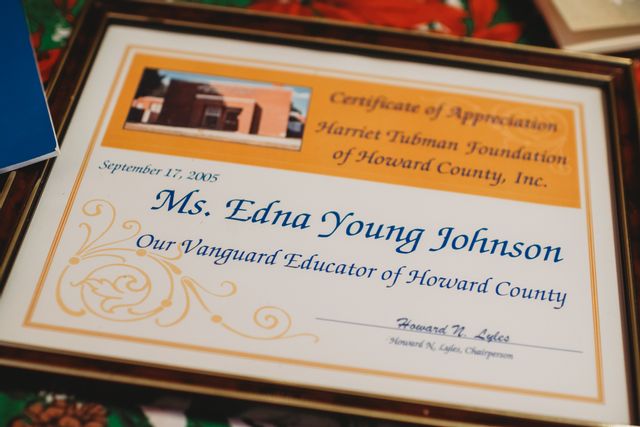
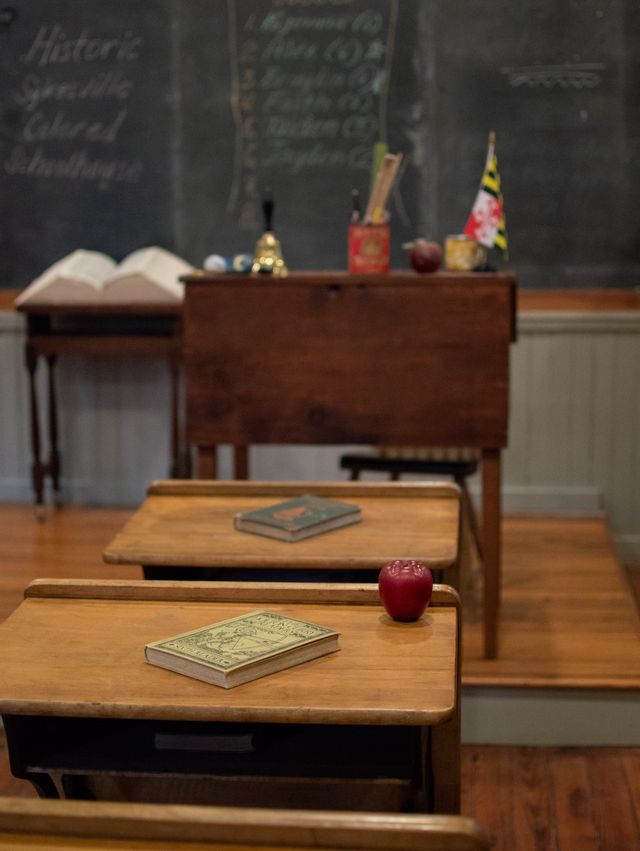
The second group of role models were the Black teachers at Freedom Elementary School - Mrs. Edna Johnson (who also has an article written about her here), Mrs. Rosa Featherstone, Mrs. Helen Butler, and Mrs. Patsy Dorsey Dade. Not only were they visible to all
students in the recently integrated school as successful Black women, but they ran an afterschool program through St. Luke UMC to support students in their community who needed help with homework or studying. These women guided their students in and out of the classroom to ensure that underserved parts of the community did not suffer, even amidst the increased racial tension of the time.
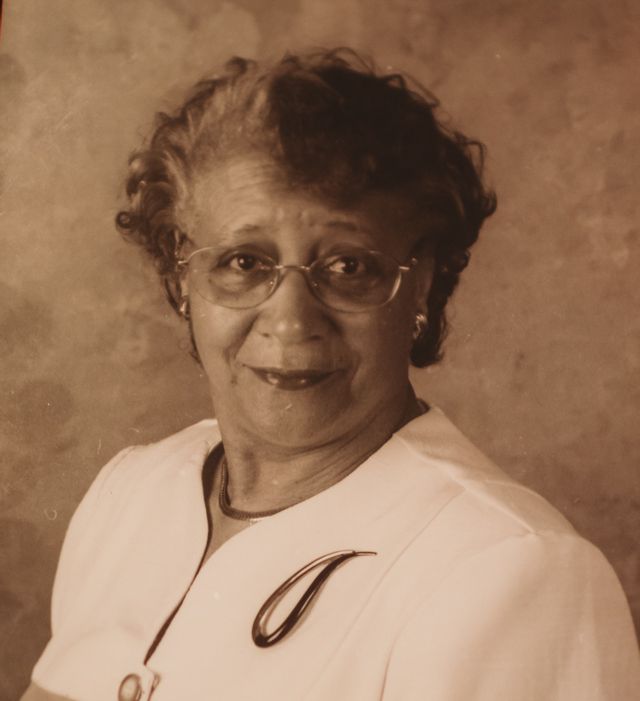
Mrs. Edna Johnson - Sykesville resident and educator
Learn more about Mrs. Johnson's story here: "A Life of Strength, Grace, and Community Leadership" and "A Legacy of Excellence, Love, and Unbreakable Spirit"
The final example was Reverend Ernest Johnson, who was a leader in Brad’s community and influenced his life personally by first making him an acolyte in the church, giving him a form of stewardship in his church, responsibility in his community and a visible position to help him hold himself accountable. When Brad decided he wanted to get out of the robe, the reverend was the one to point him to the saxophone, which Brad describes as a lifelong passion. Rev. Johnson had him playing saxophone for the congregation every Sunday and then encouraged him to turn that passion into a career.
Brad emphasised the importance of these leaders in his life by describing the way they interacted with him and other young members of the community. “They taught us to respect ourselves and others and maintain dignity in everything we did.” Even through times of increased racial tensions. He acknowledged the difficulties that the adults in his community must’ve been facing as the country went through the Civil Rights Movement, but says that anger didn’t get passed down to him. “That bitterness, you never saw it. That was so crucial,” a modeled behavior that he took into his own experiences. He told me about riding the school bus as a child, which drove past his front door on the way to and from school, but only stopped at the bus stop a quarter mile away to pick up or drop off him and his fellow Black classmates, while white children were better accommodated. He recalls trying to huddle twenty kids under the small bus stop shelter on rainy days, some of them having to stand in the rain anyway because they didn’t all fit.
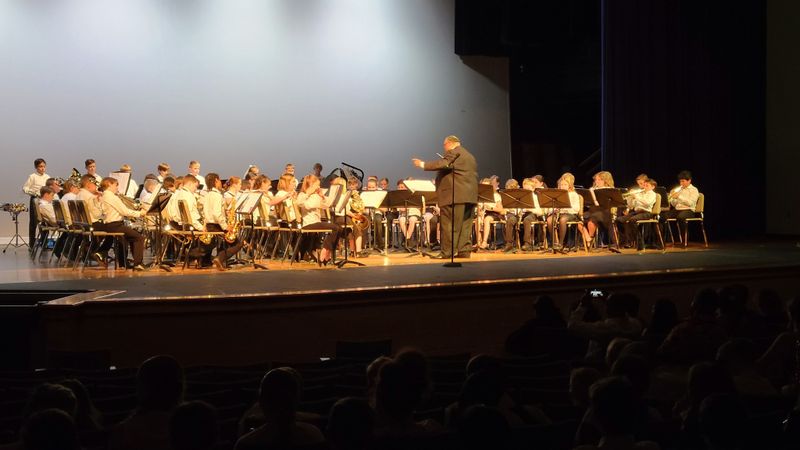
Pushed by these experiences with racism in school and that echo of modeled behavior from his elders to, in his words, “turn the other cheek, but try to make it better,” he pursued a career born out of his passion for music. A career that ended up being not only decades long, but also multi-faceted as the Director of Bands at South Carroll High School, Linton Springs Elementary School, Carrolltowne Elementary School, and Eldersburg Elementary School across 42 years and a successful jazz saxophonist across the country to this day. While working in the schools, he took the lessons that his role models had handed down to him and applied them to his students, supporting and encouraging them to become better musicians and then use that gift to improve the lives of others in their own communities. “The only thing I wanted to do was exactly what Johnsville and Sykesville did with me, to share everything I knew on how to make them successful.” He stressed to me that it was a privilege for him to work with youth. He expressed that in the 32 years he spent in local elementary schools and 10 years at South Carroll High School, he felt supported by not only the students, but also the faculty, administration, parents, and even the greater community with strong programs and strong enrollment in what was an elective course. His only wish was to see more minority educators in classrooms.
A sentiment that he echoed in school athletics, where he wants to see more minority coaches across sports in the school system. As a high school athlete - recall he was the first Black quarterback in Carroll County - and a baseball coach for both Junior Varsity (6 years) and Varsity (3 years), he experienced that lack of diversity firsthand. Emphasising the importance of learning from people different from you, Brad told me, “If you don’t respect cultures and multi-diversity, someone won’t learn something…If you’re never taught those things, how are we going to appreciate what Sykesville could turn into?”
His own willingness to learn and grow led him to find specific ways to help his community, something he plans to continue to do in retirement, hoping to find more venues in town to play his beloved saxophone. But he brings it all back to St. Luke United Methodist Church and Johnsville United Methodist Church. “Everything that I am, I think, developed out of both of these churches.” And the community there is thriving still today. “Johnsville has so much to be proud of,” he told me while asking me to look around the sanctuary and feel the history. And he’s right. The white building with its red cross that’s been standing on its foundation for over a century with a cemetery out back, blanketing the hill in a patchwork quilt of family names, may appear unassuming, but it houses a community that thrums deep in the heart of Sykesville and truly makes our town special. Brad began to wrap up our conversation by saying, “You can't tell me that our family and friends who were Sykesville residents weren’t hoping we’d learn from their sacrifices, and it seems like we have.” I hope we continue to, and I know that my time spent learning about this foundation community has only encouraged me to learn and engage more with the people of all backgrounds and cultures around me. After all, as Brad emphasised several times to me, we all have something significant and unique to offer.
5.0 (79 Reviews)
Downtown Sykesville Connection
7611 Main Street, Suite 3
Sykesville, MD 21784
(410) 216-4543
www.downtownsykesville.com