A Message from Charlotte: Compost Enthusiast and Girl Scout Troop 1290 Member
Dear Sykesville Community,
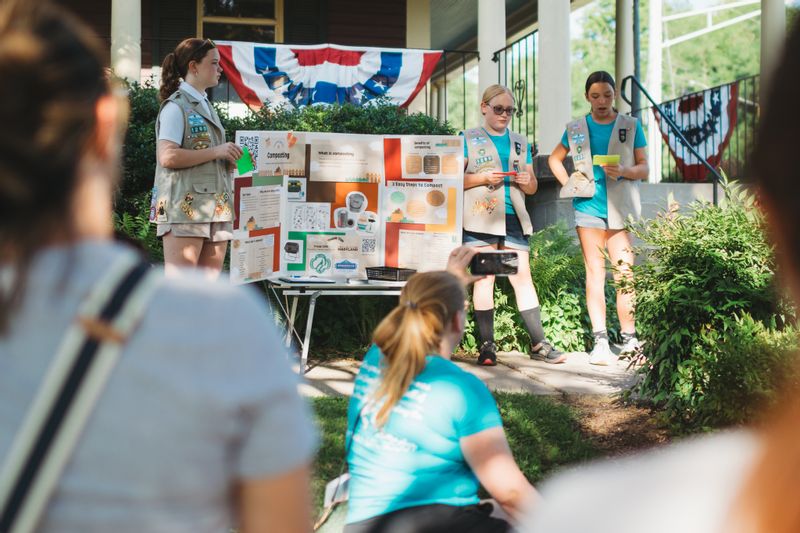
We're thrilled by the turnout at our recent composting presentation! For those who couldn't make it, fret not – we've compiled everything you need to know about what you can compost right here.
Let's explore the exciting world of compostable materials, neatly categorized into Green and Brown components, with a helpful tip on ratios:
Green (Nitrogen-rich):
- Vegetable scraps (like those colorful carrot tops and potato peels)
- Fruit peels and scraps (from apples to zesty orange peels)
- Garden clippings (those trimmings from your lush bushes and blooming flowers)
- Tea bags (after you've savored that soothing cuppa)
- Coffee filters (complete with those coffee grounds, of course)
- Leaves (fallen or trimmed, they're perfect for composting)
- Green plant cuttings (snips from your indoor jungle)
- Barnyard manure (a bit pungent, but a composting powerhouse)
- Seaweed and kelp (rinse off the saltwater first)
- Young weeds (before they take over your garden)
Brown (Carbon-rich):
- Dry leaves (crispy and great for balancing your compost)
- Wood chips (ideal for aeration and adding structure)
- Straw and hay (think of it as cozy bedding for your compost)
- Twigs and branches (break them up for easier composting)
- Tree bark (slow to break down, but adds texture)
- Cardboard (sans glossy or colored parts)
- Paper/newsprint (excellent for absorbing moisture)
- Sawdust (only from untreated wood)
- Pine needles/pine cones (a natural touch)
- Eggshells (rinse and crush them for added calcium)
- Brown paper bags (reuse in a new eco-friendly way)
- Paper towels (used and ready for composting)
Remember, for optimal composting, aim for a ratio of about 3 parts Green to 1 part Brown materials. This balance ensures your compost pile has the right mix of nitrogen and carbon for efficient decomposition and nutrient-rich compost.
And couple last tips:
- Most glossy printed paper can be composted, but colored and glossy paper, which may contain toxic heavy metals, cannot be composted.
- If you're composting taped cardboard boxes, remove the tape and labels beforehand. Shredding the cardboard also helps speed up the composting process.
Thank you all for your enthusiasm for composting and for being fantastic stewards of our environment!
Sincerely,
Charlotte/Compost Enthusiast